

There is a marketing strategy that made Andrew Tate the most googled man on earth, helped Roy Lee raise $15M from Andreessen Horowitz on pure mindshare, and pushed a calorie-tracking wrapper called Calai.app to a nine-figure exit at $5M monthly revenue. Even Trump got elected thanks (partly) to this strategy !
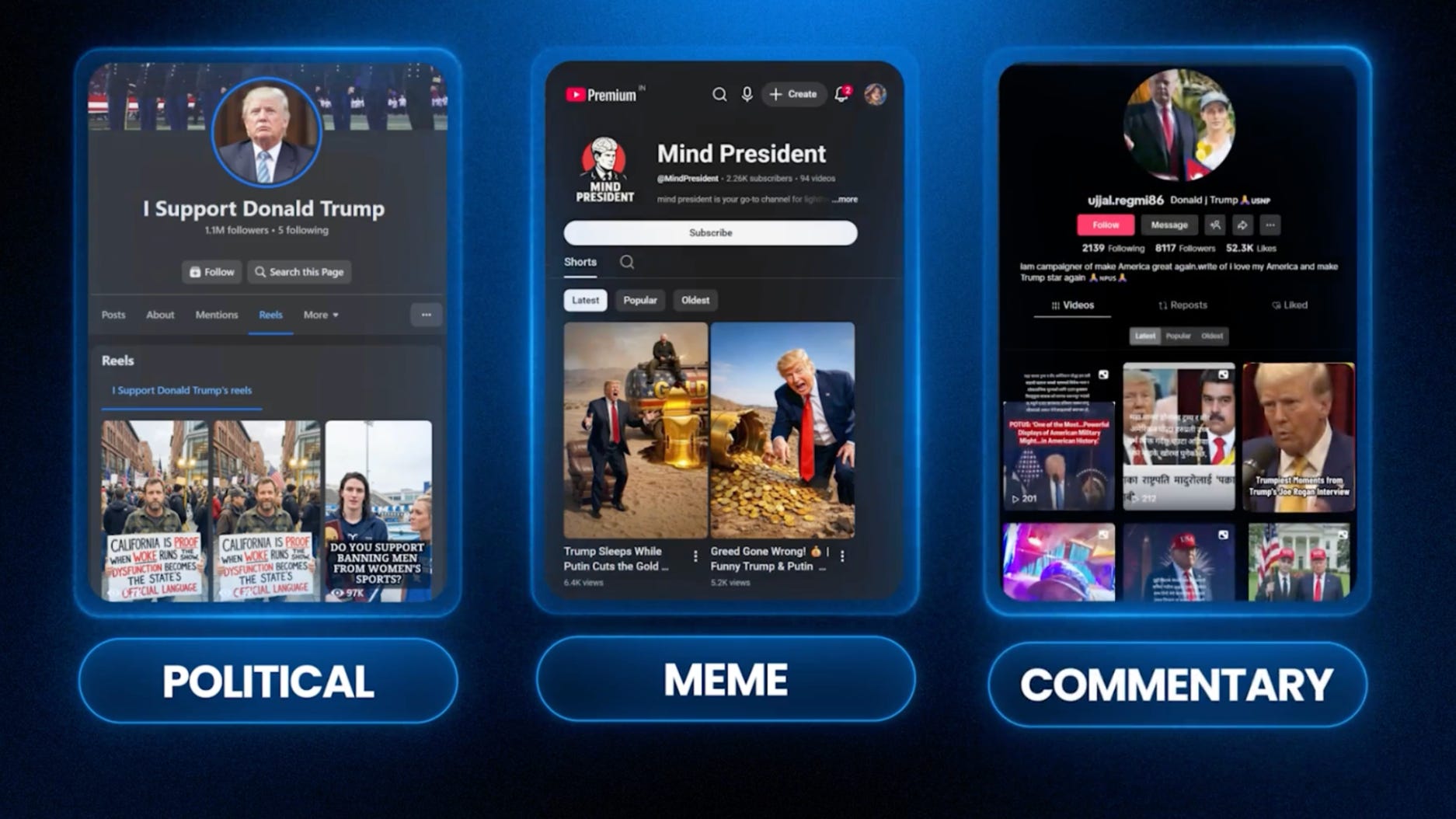
No paid ads. No PR agency. No influencer deals.
Just clipping.
Most founders still don’t understand what it is. The ones who do mostly get it wrong.
Here is what I’ve learned scaling helping customers getting millions of cost efficient impression with Reach.cat.
What Clipping Actually Is
Clipping is not a content strategy. It is a distribution architecture.
The mechanic is simple. You produce long-form content, a podcast, an interview, a rant, and you systematically break it into short clips that flood short-form platforms. Instagram Reels, TikTok, YouTube Shorts. The long format feeds the short format. The short format builds the awareness. Awareness builds the brand.
But here is what most people miss: a long format is not a conversation. It is not improvisation. It is a succession of engineered short formats disguised as a monologue.
Every segment is designed before the camera rolls. Every subject must be memorable, concrete, and plausible. Each transition is deliberate. You need anger, desire, and suspicion in the right proportions. You need to understand what the dominant opinion is in your market and where the cracks are, where people secretly disagree, where they feel lied to, where they want permission to believe something different.
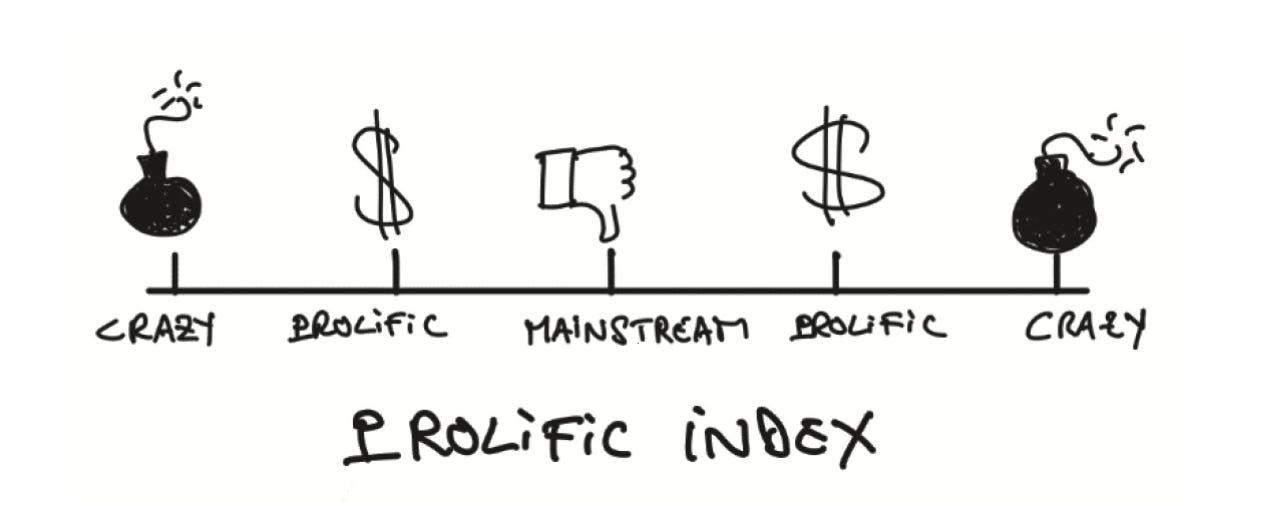
Expert Secrets’ author Russell Brunson calls this the Prolific Index. Too boring and nobody clips it. Too extreme and nobody believes it. The sweet spot is the slightly outrageous claim that is also undeniably true. That is the only raw material worth clipping.
Without that, nothing else matters.
Where This Came From
The clipping meta was born in the post-Covid chaos of 2020 to 2022. Andrew Tate was the first to systematize it at scale. He opened the model completely, anyone could clip his content, repost it, and earn affiliate commissions. Thousands of TikTok accounts ran in parallel. According to The Guardian, total impressions crossed 11.6 billion. His product, a digital education program (“The Real World”), reached eight figures in monthly recurring revenue with zero paid advertising spend. One of the best-performing infobiz operations in the world.
Luke Belmar took the same mechanic and internalized it. Between 400 and 600 videos produced daily. 250 to 400 million views per month. $100K monthly burn. This is not content. It is content infrastructure.
Then the startup world caught on.

Roy Lee built Cluely’s entire fundraising narrative through podcast appearances. He walked into rooms saying things that had no business being said out loud. The clips spread. The mindshare accumulated. $15M closed at a16z. The product itself was secondary. The awareness was the asset.
Calai.app posted 1,000 TikToks per week. A calorie tracker. A wrapper. A nine-figure exit.
MrBeast is now building Vyro, a dedicated clipping infrastructure platform. When the world’s largest individual content operation builds tooling for clipping, you pay attention.
The Three Strategies, Ranked by Chaos
There are three ways to run a clipping operation. They are not equally effective.
The first is the open incentive model. You publish a CPM rate, say $1 per 1,000 views, on a platform like Whop, and let anyone clip anything. Andrew Tate ran on pure affiliation. Today, the smarter version combines CPM with affiliation, because affiliation alone takes weeks to pay out. A clipper who earns their first dollar within 48 hours has a fundamentally different relationship with the campaign than one who waits two months for a commission. The 48-hour payout activates something. They believe it is possible. They double down.
The problem is chaos. Your brand gets clipped between OnlyF*ns promo and casino advertising. The juxtaposition destroys positioning. Open incentive at scale is a brand risk dressed up as a growth strategy.
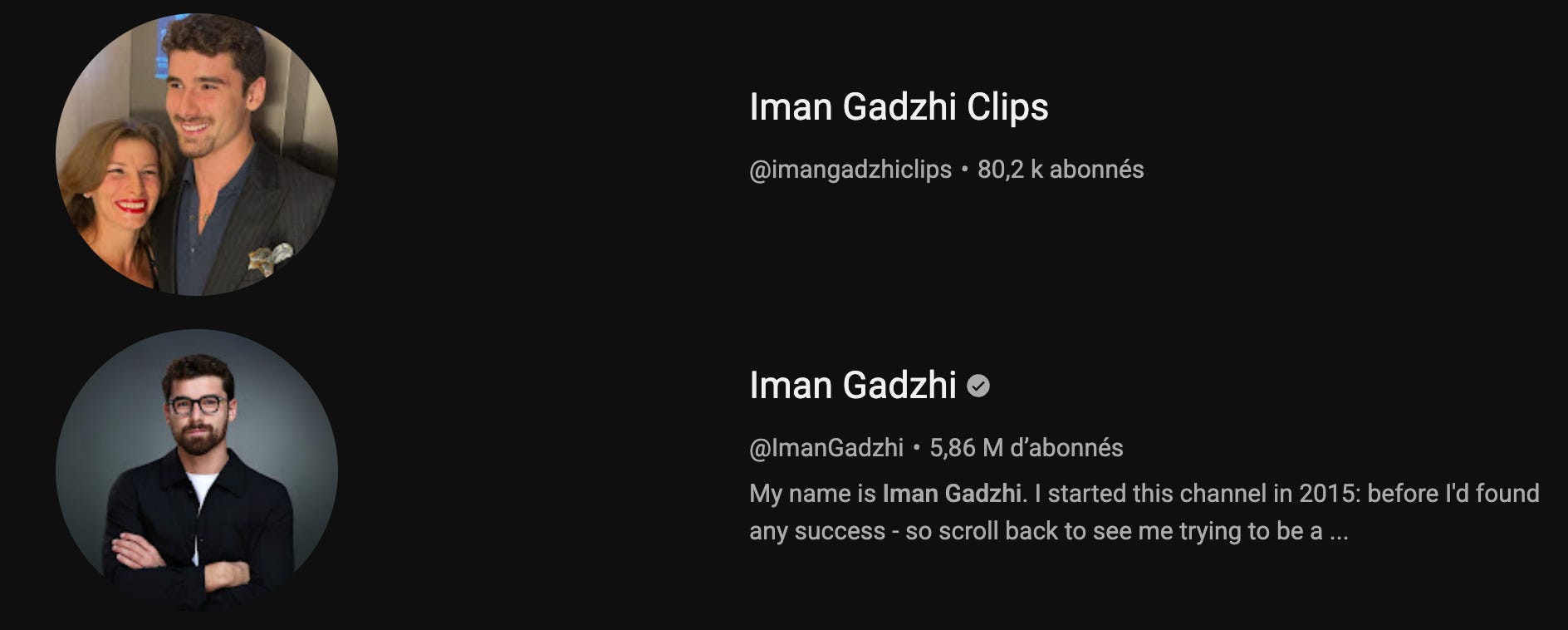
The second is the internalized team model. Iman Gadzhi, Alex Hormozi and Luke Belmar all run this. You build a coordinated clipper network with dedicated accounts that post exclusively about your brand. No cross-contamination. You control the narrative, the account positioning, and the incentive structure. The chaos problem disappears. The coordination cost appears instead.
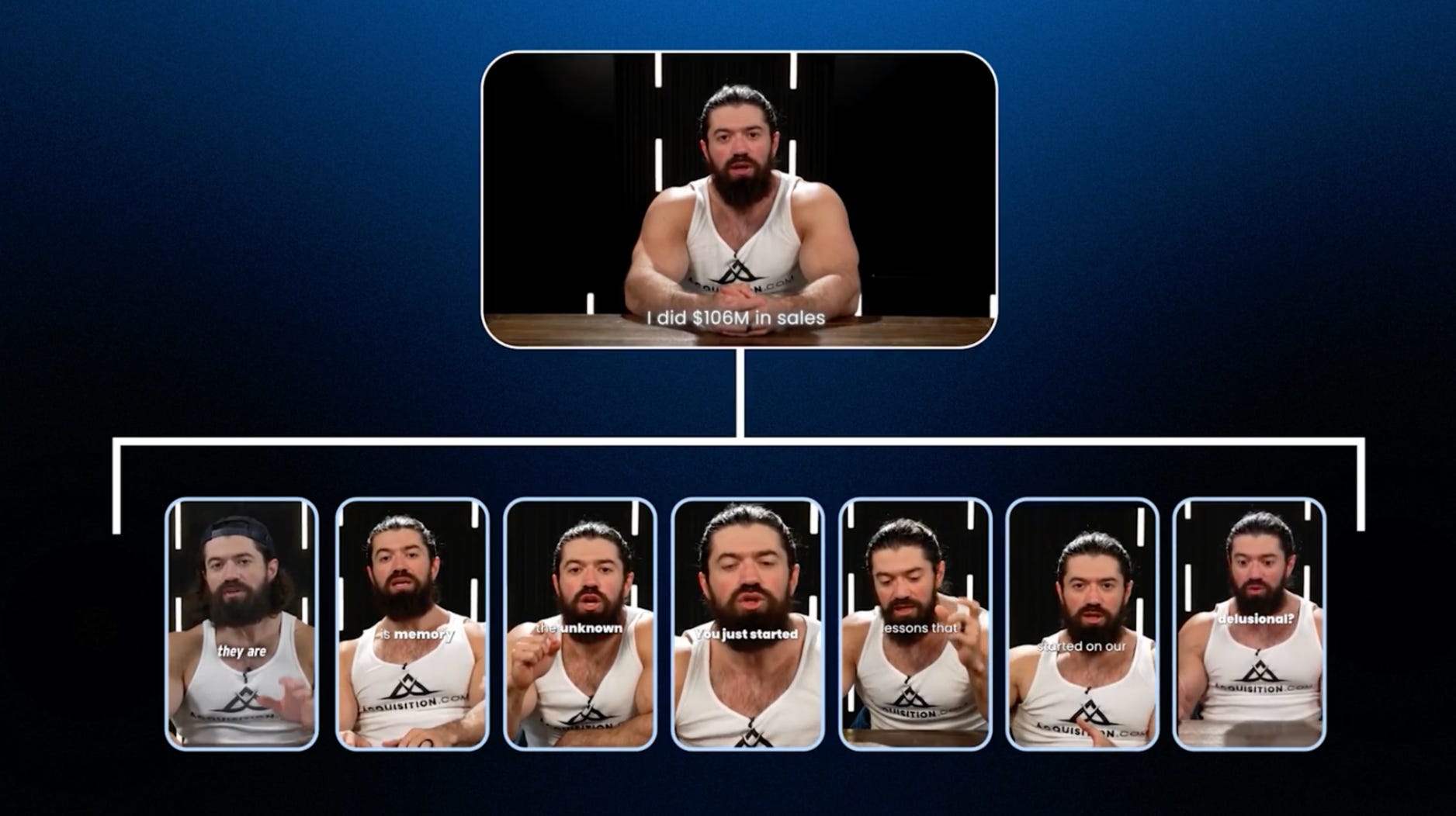
The third is done-for-you. This is what Reach.cat does for clients. Smartphones, proxies, clipping technology, tracking infrastructure, the entire backend, managed externally. For founders and infopreneurs who want the distribution without building the team, this is the current best option on the market.
On the infrastructure side, Reach.cat has also built what is arguably the best tracking backend in the clipping space. A detail worth noting: several agencies that oversell clipping campaigns quietly outsource their entire backend to Reach.cat. The client thinks they are buying the agency’s proprietary system. They are buying Reach.cat with a margin on top.
What Clipping Cannot Fix
Here is the conversation nobody is having.
Clipping is a top-of-funnel awareness strategy. It is NOT a conversion engine. It does NOT generate clicks. It does NOT close sales. It builds mindshare, and mindshare takes months to convert into revenue through organic brand gravity.
Most founders who invest $5,000 or $10,000 into a clipping campaign expect measurable revenue within two weeks. When it does not arrive, they conclude that clipping does not work. What actually happened is that they misunderstood the funnel position.
This is partly a product market problem and partly a dishonest agency problem. Some agencies promise results they cannot deliver because they have no incentive to educate the client. The client churns confused, the agency moves to the next one.
But there is a deeper issue. Clipping cannot save bad source material.
The founders who come to Reach.cat with 300-view YouTube videos and expect clipping to solve their growth problem are working from a wrong diagnosis. The clips are not the bottleneck. The content is. If the long-form is not engineered for clippability, if it does not contain the Prolific Index moments, the anger, the desire, the concrete claims, then distributing it at scale just accelerates irrelevance.
Clipping is a multiplier. It multiplies what is already there. Applied to weak content, it returns nothing.
The Platform Question
The one genuine uncertainty in this meta is not the technology. It is not the economics. It is the platforms.
Meta, YouTube, and TikTok are absorbing an accelerating volume of programmatic, low-signal content. The algorithms currently reward volume and engagement regardless of origin. That may not hold.
If platforms begin penalizing coordinated multi-account distribution, the open incentive model collapses first. The internalized and done-for-you models, which operate with more signal discipline, survive longer. But nobody knows where the tolerance ceiling is.
This is the only real bet in the clipping meta. Everything else is execution.
Why This Goes Mainstream
The clipping meta was built inside infobiz and personal brand ecosystems because those operators move fast and have high tolerance for experimentation. But the underlying mechanics, crowdsourced creativity, decentralized distribution, contained costs, are not specific to infobiz.
What keeps clipping expensive today is human labor. Clippers are paid per thousand views. Editors cost money. Campaign management costs time.
AI deflates all of that. The cost of producing a clip is approaching zero. The cost of managing a network of accounts is approaching zero. The CPM economics that currently make clipping a premium strategy will compress dramatically as AI tooling matures.
When the cost of entry collapses, the strategy becomes accessible to any B2C brand with a media budget. By 2030, a mainstream automotive brand or a pasta sauce manufacturer will run clipping campaigns the same way they currently run display advertising. The infrastructure will be commoditized. The execution will be automated. The only remaining variable will be the quality of the source material.
Which brings everything back to the same constraint it always was.
The content has to be worth clipping.